

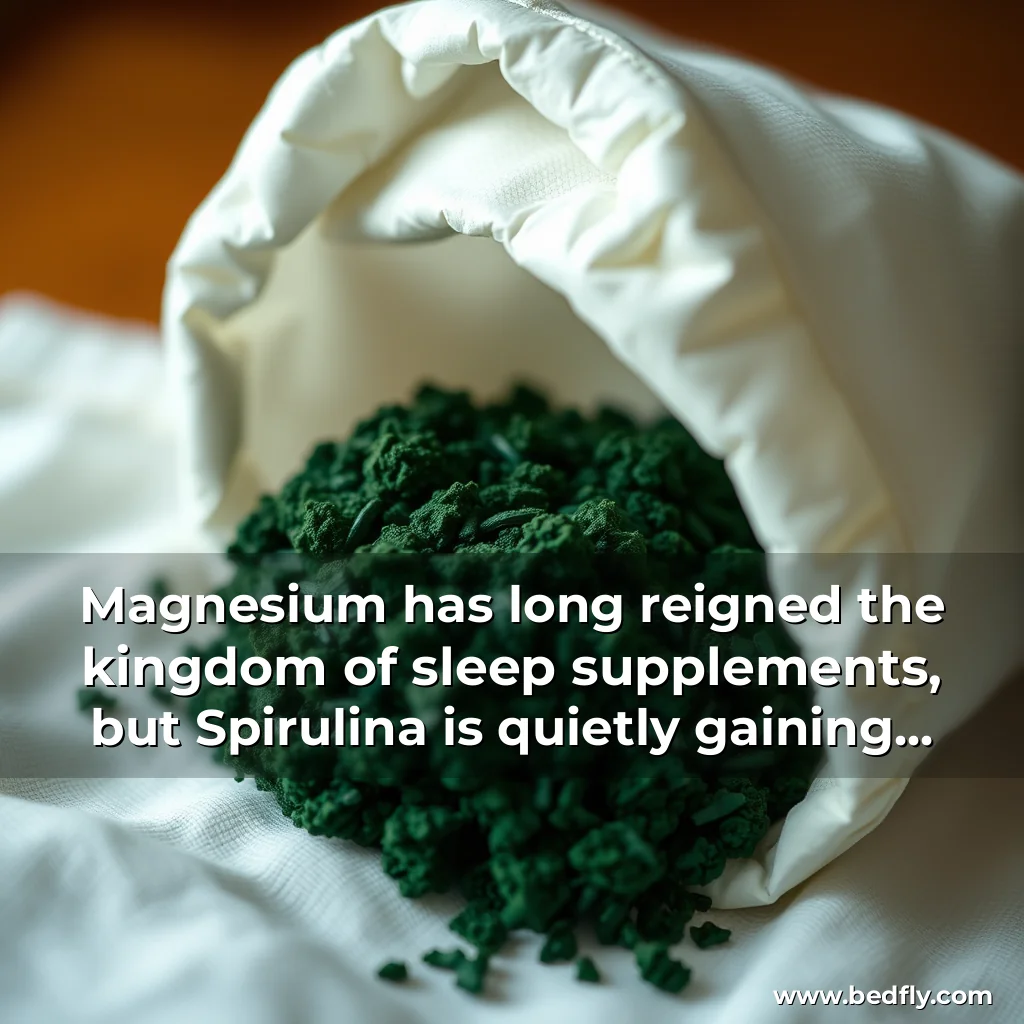
Daytime habits are a key player in sleep architecture, and researchers are increasingly focusing on the link between diet and sleep quality. A recent study published in the journal Food Science & Nutrition shed new light on the benefits of Spirulina, a blue-green algae supplement, in improving sleep and mental wellbeing.
- Rich in nutrients, Spirulina is packed with protein, vitamins, minerals, and antioxidants, making it a popular choice for various health benefits.
- It is commonly used to improve cholesterol, reduce blood pressure, and exhibit anti-inflammatory effects.
Spirulina’s reputation as a “superfood” is well-deserved, thanks to its impressive nutrient profile. However, the new study adds a new string to its bow by highlighting its potential to improve sleep quality and mental health.
Key Findings from the Study
| Study Participants | Conditions | Results |
|---|---|---|
| 66 participants | Mild to moderate depression | Improved sleep quality by 29% with Spirulina |
| 2 grams of Spirulina daily | Placebo for 8 weeks | Significant improvement in sleep quality and mental health |
The study involved randomly assigning participants to receive either 2 grams of Spirulina or a placebo for 8 weeks. Assessments were conducted at baseline, week 4, and week 8 to evaluate health metrics, the Depression Anxiety Stress Scales (DASS), and the Pittsburgh Sleep Quality Index (PSQI).
- PSQI scores decreased from an average of 7.03 at baseline to 4.97 at the end of the trial for the Spirulina group.
- Control group’s scores changed from 8.07 to 6.73 over the same period.
The study also demonstrated a consistent reduction in DASS scores, with the Spirulina group decreasing from an average of 19.27 at baseline to 11.58 at week 8, while the control group dropped from an average of 15.43 to 12.63.
This reduction in DASS scores is statistically significant, indicating a clear difference between the two groups. The results suggest that Spirulina can have a positive impact on sleep quality and mental health, making it a promising supplement for those struggling with sleep and mental wellbeing.
How Spirulina Improves Sleep Quality
Spirulina’s sleep-enhancing benefits can be attributed to its rich content of nutrients, including B vitamins, iron, and magnesium. These nutrients play a crucial role in the production of sleep hormones, such as serotonin and melatonin, which regulate sleep and mood.
- B vitamins are essential for the production of sleep hormones.
- Iron is crucial for avoiding insomnia.
- Magnesium aids sleep by calming the nervous system and relaxing muscles.
Additionally, Spirulina contains tryptophan, an amino acid that must be obtained through the diet to help the body produce serotonin and melatonin. These hormones are essential for regulating sleep and mood.
Mental Health and Sleep: A Two-Way Street
Mental health and sleep are intricately linked, with poor mental health leading to poor sleep and vice versa. Anxiety can make it difficult to fall asleep, while depression can cause insomnia and hypersomnia, leading to sleep inertia in the morning.
Stress can also cause sleep paralysis. However, the antioxidants present in Spirulina contribute to stress reduction and overall brain health, further supporting sleep.
By reducing depressive and stress symptoms, Spirulina can ease a range of sleep troubles, including sleep inertia and morning grogginess. This allows for better quality, restorative sleep.
Other Sleep Supplements
Besides Spirulina, there are several other sleep supplements that have been proven to help improve sleep quality and duration. Some popular options include:
- Magnesium: A mineral that calms the nervous system and supports sleep hormone production.
- Melatonin: A hormone that makes you feel sleepy, often used to supplement natural production.
- Valerian: A herbal sleep aid that promotes relaxation and improves sleep quality.
Each of these supplements has its own unique benefits and may be more suitable for certain individuals.

Related Articles